Reviews Article
Pollinator Dynamics: The Critical Role of Bees in Plant Reproduction and Ecosystem Stability 
 ,
Jun Li
,
Jun Li  Author Correspondence author
International Journal of Super Species Research, 2024, Vol. 14, No. 3
Received: 19 Apr., 2024 Accepted: 21 May, 2024 Published: 27 May, 2024
The polar bear (Ursus maritimus) is the apex predator of the Arctic region, and its survival is heavily dependent on the ice-covered polar environment. However, with the intensification of global climate change, temperatures in the Arctic are rapidly rising, leading to widespread sea ice melt. This environmental change has profound impacts on the biology and ecology of polar bears, threatening the survival of this species. This study reviews existing literature to comprehensively analyze the effects of climate change on polar bear habitats, prey availability, hunting behavior, reproductive success, and overall population viability. Additionally, the study focuses on the polar bear population in the Hudson Bay area, exploring the specific challenges posed by early ice melt and the corresponding conservation efforts. The findings reveal that the loss of sea ice due to climate change significantly affects polar bears' hunting efficiency and energy balance, thereby threatening their health and reproductive success. As habitats shrink and prey become scarcer, polar bears' movement patterns and ranges have changed significantly. Case studies indicate that the Hudson Bay polar bear population faces immense survival pressure due to the earlier melting of sea ice. Understanding the impact of climate change on polar bears is crucial not only for the conservation of this iconic species but also for the overall health of the Arctic ecosystem. By analyzing the adaptive capacity and resilience of polar bears in response to environmental changes, this study provides scientific support for the development of effective conservation strategies and emphasizes the critical role of international cooperation in protecting the Arctic ecosystem
1 Introduction
Polar bears (Ursus maritimus) are apex predators in the Arctic ecosystem, playing a crucial role in maintaining the balance of marine life. As top predators, they primarily feed on seals, particularly ringed seals (Pusa hispida), which they hunt on sea ice. This specialized diet and their reliance on sea ice make polar bears highly vulnerable to changes in their environment (Iversen et al., 2013; Florko et al., 2021; Petherick et al., 2021). The Arctic is experiencing rapid warming, leading to significant declines in sea ice extent and thickness, which directly impacts polar bear hunting grounds and, consequently, their survival and reproductive success (Tartu et al., 2017; Lunn et al., 2016; Fry et al., 2023).
Studying polar bears in the context of climate change is essential for several reasons. Firstly, polar bears are an indicator species, meaning their health reflects the overall health of the Arctic ecosystem. Changes in their population dynamics, body condition, and behavior can provide early warnings about the broader impacts of climate change on Arctic biodiversity (Campagna et al., 2013; Laidre and Stirling, 2020). Secondly, polar bears are culturally and economically significant to Indigenous communities in the Arctic, who rely on them for subsistence hunting and as part of their cultural heritage (Krey et al., 2015). Understanding how climate change affects polar bears can help in developing effective conservation strategies and policies to protect both the species and the livelihoods of Indigenous peoples (Dietz et al., 2015).
This study synthesizes current research on the impacts of climate change on polar bear populations, with a focus on changes in their diet, body condition, reproductive success, and overall health. Additionally, it explores the physiological and ecological adaptations of polar bears to a warming Arctic environment and identifies knowledge gaps that need to be addressed to improve conservation efforts. By compiling and analyzing data from multiple studies, this research aims to provide a comprehensive understanding of the challenges faced by polar bears in a rapidly changing environment and to inform future research and policy decisions.
2 Biology and Ecology of Polar Bears
2.1 Physical characteristics and adaptations to the arctic environment
Polar bears (Ursus maritimus) are highly specialized mammals, uniquely adapted to the extreme conditions of the Arctic. They possess a thick layer of blubber, which not only provides insulation against the freezing temperatures but also serves as an energy reserve during periods of food scarcity. Their fur, although it appears white, is actually translucent and works by trapping air close to the skin, enhancing insulation and contributing to buoyancy in water. This adaptation is crucial for their survival, as polar bears spend much of their lives on sea ice, swimming between ice floes in search of prey.
In addition to these physical adaptations, polar bears have evolved large, powerful paws that aid in swimming and walking on thin ice. Their claws are sharp and curved, helping them grip the slippery surfaces of ice and hold onto their prey. The bears' metabolic system is also finely tuned to the Arctic environment, allowing them to store large amounts of fat during the seal hunting season, which they rely on during the lean months when food is scarce (Rode and Stirling, 2009). These adaptations highlight the polar bear's exceptional ability to thrive in one of the most inhospitable environments on Earth.
2.2 Habitat preferences and hunting strategies
Polar bears are highly dependent on sea ice, which they use as a platform for hunting seals, their primary prey. They prefer areas of the Arctic where the ice is thick enough to support their weight but still has enough leads (openings in the ice) for seals to surface and breathe. This habitat preference is crucial, as it determines their access to prey. In particular, polar bears are most successful in areas where the ice meets open water, known as the marginal ice zone, which is rich in seals.
Their hunting strategies are adapted to the Arctic environment. Polar bears are solitary hunters that rely on patience and stealth. One common hunting technique involves waiting near a seal's breathing hole for hours, striking when the seal surfaces. They also stalk seals resting on the ice, using their white fur as camouflage. These strategies are highly effective but depend heavily on the availability of sea ice. As climate change reduces the extent and duration of sea ice, polar bears are forced to travel greater distances and expend more energy to find food, threatening their survival (Florko et al., 2021).
2.3 Role of polar bears in the arctic food web
As apex predators, polar bears play a critical role in the Arctic food web. They primarily feed on seals, particularly ringed seals and bearded seals, which they hunt on the sea ice. By controlling seal populations, polar bears help maintain the balance of the marine ecosystem, preventing the overpopulation of seals, which could otherwise lead to depletion of fish stocks and other marine resources. This predatory role is vital for the health of the Arctic marine environment, influencing the population dynamics of numerous species (Iversen et al., 2013).
Beyond their role as predators, polar bears also contribute to the nutrient cycle in the Arctic. The remains of their prey, left behind after feeding, provide food for scavengers such as Arctic foxes, gulls, and other species. This secondary consumption helps distribute nutrients across the ecosystem, supporting a diverse range of wildlife. However, as climate change alters the Arctic environment, the role of polar bears in the food web is likely to shift, with potential consequences for the entire ecosystem (Prop et al., 2015).
3 Impact of Climate Change on the Arctic Environment
3.1 Overview of the warming arctic and melting sea ice
The Arctic region has experienced warming at a rate more than twice the global average, a phenomenon known as Arctic amplification. This rapid warming has led to significant melting of Arctic sea ice and spring snow cover, occurring at a pace faster than predicted by climate models (Cohen et al., 2014; You et al., 2021). The primary drivers of this amplification include local feedback mechanisms such as the sea ice-albedo feedback, where the loss of reflective ice surfaces leads to greater absorption of solar radiation by the darker ocean, further accelerating warming (Figure 1) (Screen and Simmonds, 2010; Previdi et al., 2021). Additionally, increased concentrations of atmospheric greenhouse gases have been identified as a major factor contributing to this rapid warming (Screen and Simmonds, 2010).
|
Figure 1 Observed changes in surface air temperature (SAT) and sea ice concentration (SIC) in the Arctic region from October to December during the period 1979-2018 (Adapted from Previdi et al., 2021) Image Caption: The figure uses color shading to represent changes in surface air temperature (in Kelvin, K), with data derived from the average of three reanalysis datasets. The white contour lines indicate changes in sea ice concentration (in percentage), with data taken from the HadISST dataset, and only negative values (corresponding to sea ice reduction) are shown (Adapted from Previdi et al., 2021) |

Previdi et al. (2021) revealed a significant increase in surface air temperature in the Arctic region over the past 40 years, particularly during the late autumn to early winter period (October to December). This warming is associated with a substantial reduction in sea ice, especially in the central Arctic region and along the northern coast of Russia. The increase in surface air temperature and the reduction in sea ice create a positive feedback mechanism that accelerates Arctic warming. Figure 1 provides critical evidence for understanding Arctic climate change and highlights the importance and vulnerability of the Arctic region within the global climate system.
The consequences of Arctic amplification are profound, affecting not only the Arctic region but also potentially influencing weather patterns in the mid-latitudes. The reduction in sea ice cover has been linked to changes in atmospheric and oceanic circulation, cloud cover, and water vapor content, all of which play roles in the observed temperature increases (Screen and Simmonds, 2010; Serreze and Barry, 2011). These changes are expected to continue, with models projecting that the Arctic will warm at a rate almost four times the global average in the future (You et al., 2021). This ongoing warming poses significant challenges for the Arctic ecosystem and the species that depend on it, including polar bears.
3.2 Changes in prey availability and distribution
The warming Arctic has led to shifts in the distribution and availability of prey species, which are critical for the survival of polar bears. As sea ice melts earlier in the spring and forms later in the autumn, the hunting grounds for polar bears are significantly reduced. This reduction in sea ice limits access to their primary prey, seals, which rely on sea ice for breeding and resting (Screen and Simmonds, 2010; Serreze and Barry, 2011). The decline in sea ice has also been associated with changes in the abundance and distribution of fish species, further impacting the food web dynamics in the Arctic (Serreze and Barry, 2011).
Moreover, the altered timing of sea ice melt and formation affects the migratory patterns of prey species, making it more challenging for polar bears to find sufficient food. The increased energy expenditure required to travel greater distances in search of prey, combined with the reduced hunting success due to less stable ice platforms, has led to declines in polar bear body condition and reproductive success (Screen and Simmonds, 2010; Serreze and Barry, 2011). These changes in prey availability and distribution underscore the interconnectedness of the Arctic ecosystem and the cascading effects of climate change on top predators like polar bears.
3.3 Impacts on polar bear habitat and behavior
The loss of sea ice habitat due to Arctic amplification has profound implications for polar bear behavior and survival. Polar bears rely on sea ice as a platform for hunting seals, their primary food source. As sea ice continues to decline, polar bears are forced to spend more time on land, where food resources are scarce and human-wildlife conflicts are more likely to occur (Screen and Simmonds, 2010; Serreze and Barry, 2011). This shift in habitat use has been associated with increased incidences of polar bears scavenging for food in human settlements, leading to potential risks for both bears and humans (Serreze and Barry, 2011).
In addition to changes in habitat use, the loss of sea ice has also affected polar bear reproductive behaviors. Female polar bears typically build dens on stable sea ice or coastal areas to give birth and raise their cubs. With the reduction in suitable denning areas, there is increased mortality of cubs and lower reproductive rates (Screen and Simmonds, 2010; Serreze and Barry, 2011). The overall decline in sea ice habitat not only threatens the immediate survival of polar bears but also has long-term implications for their population dynamics and genetic diversity. As the Arctic continues to warm, the future of polar bears remains uncertain, highlighting the urgent need for conservation efforts to mitigate the impacts of climate change on this iconic species.
4 Physiological and Behavioral Responses to Climate Change
4.1 Changes in polar bear body condition and health
The rapid loss of Arctic sea ice has profound effects on the body condition and health of polar bears. As sea ice diminishes, polar bears experience longer periods of fasting due to reduced access to their primary prey, seals. This leads to a decline in body condition, characterized by reduced fat stores and overall poorer health. For instance, studies have shown that polar bears now spend an additional 30 days on land compared to previous decades, correlating with a decline in body condition across all age and sex classes (Figure 2) (Laidre et al., 2020). Additionally, the stress of prolonged fasting and reduced hunting opportunities has been linked to increased levels of cortisol, a stress hormone, indicating heightened physiological stress in polar bears (Boonstra et al., 2020). The cumulative effect of these changes is a decrease in reproductive success, with fewer and smaller cubs being born, which further threatens the long-term viability of polar bear populations (Stirling and Derocher, 2012; Laidre et al., 2020).
|
Figure 2 Relationship between Sea Ice Conditions and the Probability of Baffin Bay Polar Bears Having a Body Condition Score (BCS) of 1 (Adapted from Laidre et al., 2020) Image Caption: (a) shows that as the spring sea ice breakup date is delayed, the probability of polar bears having a BCS of 1 decreases; (b) indicates that the probability of polar bears having a BCS of 1 increases with an extended ice-free period in the previous year (Adapted from Laidre et al., 2020) |
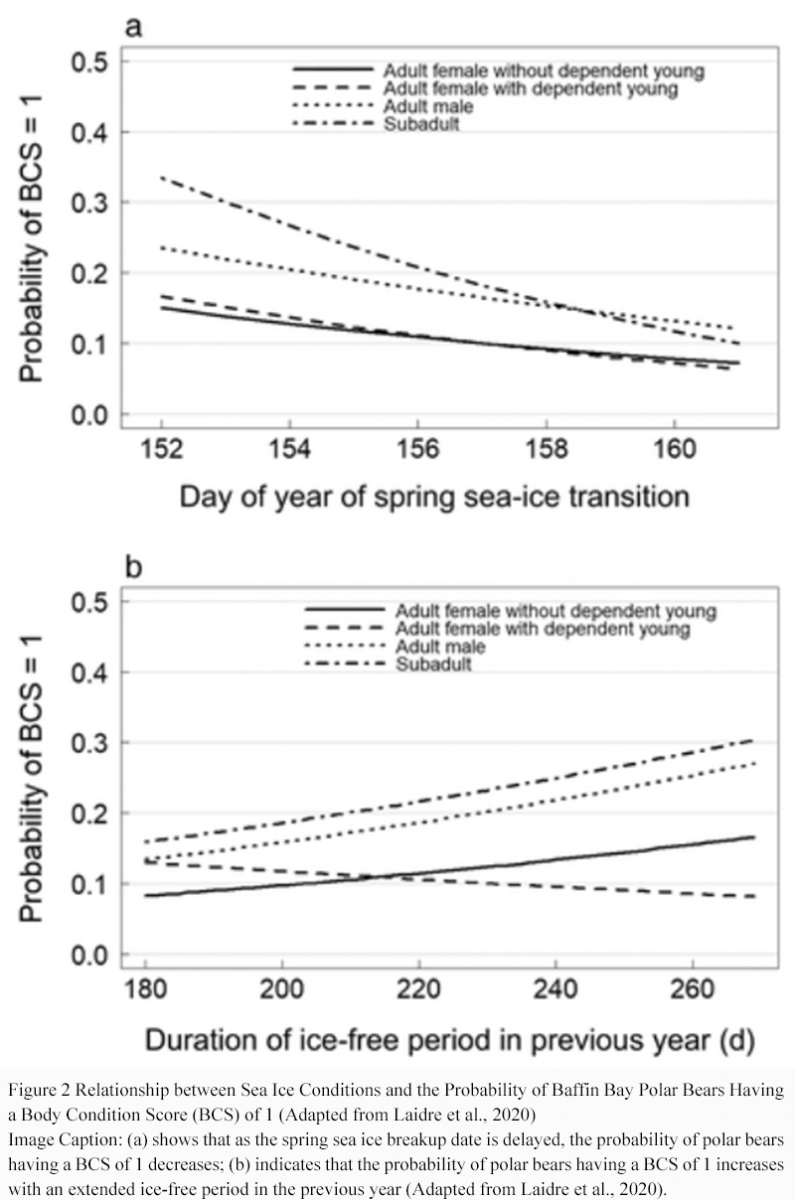
The study by Laidre et al. (2020) revealed a significant impact of sea ice conditions on the body condition of polar bears in Baffin Bay. The research found that the delayed spring sea ice breakup reduces the probability of poor body condition (BCS = 1) in polar bears, possibly because the delayed ice retreat allows polar bears more time to forage. However, the prolonged ice-free period in the previous year increases the probability of poor body condition, indicating that extended ice-free periods may lead to a reduction in food resources for polar bears, thereby affecting their body condition. This study highlights the potential threat of climate change to the polar bear ecosystem.
4.2 Altered hunting behaviors and increased energy expenditure
As the sea ice retreats, polar bears are forced to adapt their hunting behaviors, often with increased energy expenditure. The fragmentation and reduction of sea ice require polar bears to travel greater distances and swim longer to find suitable hunting grounds, leading to higher metabolic rates and energy demands (Pagano et al., 2018). This increased mobility is necessary to maintain contact with their preferred habitats and prey, but it comes at a significant energetic cost. For example, polar bears now frequently hunt for alternative terrestrial food sources, such as bird eggs, during the ice-free season, which is less energy-efficient compared to hunting seals on the ice (Prop et al., 2015). The need to walk or swim more due to the dynamic and fragmented ice conditions further exacerbates their energy imbalance, contributing to declines in body condition and survival rates (Derocher et al., 2004; Hamilton et al., 2017; Pagano and Williams, 2021).
4.3 Shifts in movement patterns and range expansion
Climate change has also led to significant shifts in the movement patterns and range of polar bears. As sea ice continues to decline, polar bears are expanding their range and altering their migration routes to adapt to the changing environment. This includes increased occurrences of long-distance swimming between hunting and denning areas and spending more time on land. The spatial overlap between polar bears and their primary prey, ringed seals, has decreased, leading to changes in predator-prey dynamics and further complicating the bears' ability to find sufficient food (Hamilton et al., 2017). Additionally, the earlier arrival of polar bears on land during the summer months has been observed, reflecting behavioral adaptations to cope with the reduced hunting range on sea ice (Prop et al., 2015). These shifts in movement patterns highlight the ongoing struggle of polar bears to adapt to the rapidly changing Arctic environment, with significant implications for their survival and conservation (Derocher et al., 2004; Lunn et al., 2016).
5 Impact on Reproduction and Survival
5.1 Effects of climate change on polar bear reproductive success
Climate change has profound effects on the reproductive success of polar bears. The primary driver is the loss of sea ice, which serves as a critical platform for hunting seals, their main prey. As sea ice diminishes, polar bears have less time to accumulate the necessary fat reserves to sustain them through periods when prey is unavailable. This reduction in fat reserves directly impacts the bears' ability to reproduce successfully. For instance, females with lower body condition due to reduced hunting opportunities produce fewer and smaller cubs, and the survival rates of these cubs are also diminished (Derocher et al., 2004; Stirling and Derocher, 2012; Laidre et al., 2020). Additionally, the lengthening of ice-free periods forces polar bears to fast for extended durations, further exacerbating the decline in body condition and reproductive success (Molnár et al., 2010; Laidre et al., 2020).
5.2 Challenges in raising cubs in a warming Arctic
Raising cubs in a warming Arctic presents numerous challenges for polar bears. One significant issue is the increased frequency of den collapses due to rain during late winter, which can result in the death of cubs. Moreover, the shift from sea-ice to land-based denning, driven by the loss of suitable sea-ice habitats, has been observed. While land-based dens may offer some advantages, such as higher snowfall and better insulation, the overall decline in sea ice negatively impacts cub survival rates (Rode et al., 2018). The prolonged fasting periods and reduced prey availability also mean that mothers have less energy to invest in their cubs, leading to lower survival rates for the young bears (Derocher et al., 2004; Laidre et al., 2020). Furthermore, the increased energy expenditure required to navigate more fragmented and mobile ice floes adds to the stress on both mothers and cubs (Derocher et al., 2004).
5.3 Implications for long-term population viability
The long-term viability of polar bear populations is severely threatened by the ongoing effects of climate change. The cumulative impact of reduced reproductive success and increased cub mortality rates leads to a decline in population growth rates. Projections indicate that if current trends continue, polar bear populations will experience significant declines, particularly in the southern parts of their range (Hunter et al., 2010; Molnár et al., 2010; Stirling and Derocher, 2012). The stochastic demographic models, which incorporate future sea ice conditions, predict drastic reductions in polar bear numbers by the end of the 21st century (Hunter et al., 2010). Additionally, the interaction between climate change and other anthropogenic factors, such as pollutant exposure, further complicates the survival prospects for polar bears. Increased levels of persistent organic pollutants (POPs) due to prolonged fasting periods can exacerbate health issues and reduce reproductive success beyond the effects of habitat loss alone (Jenssen et al., 2015). Overall, the rapid pace of ecological change in the Arctic poses a significant threat to the long-term survival of polar bears as a species (Derocher et al., 2004; Derocher et al., 2013).
6 Case Study: Polar Bears in the Hudson Bay Region
6.1 Overview of the hudson bay polar bear population
The Hudson Bay region, particularly Western Hudson Bay (WH), has been a focal point for polar bear research due to its unique seasonal ice cycle, which forces polar bears ashore each summer. Studies have shown that the WH polar bear subpopulation has experienced significant demographic changes over the past few decades. From 1984 to 2011, the population declined from approximately 1,185 bears to 806 bears, with survival rates closely linked to the timing of sea ice break-up and formation (Lunn et al., 2016). Similarly, the Southern Hudson Bay subpopulation has shown a decline in abundance, with a 17% decrease from 943 bears in 2011/2012 to 780 bears in 2016 (Obbard et al., 2018). These changes highlight the vulnerability of polar bears in this region to environmental variations.
6.2 Specific challenges faced by this population due to early ice melt
The primary challenge faced by the Hudson Bay polar bear population is the earlier break-up and later formation of sea ice, which shortens the period during which bears can hunt seals, their primary prey. This has led to declines in body condition, survival rates, and overall population size (McCall et al., 2016). The duration of the ice-free season has increased by about one month in recent decades, further exacerbating these issues (Regehr et al., 2021). Additionally, changes in sea ice dynamics have altered the foraging ecology of polar bears, with significant shifts in their diet and isotopic niche over time (Johnson et al., 2019). The movement patterns of polar bears have also been affected, with decreased annual distances moved and areas covered since 1991, correlating with changes in sea ice patterns (Parks et al., 2006).
6.3 Conservation efforts and their effectiveness in the hudson bay region
Conservation efforts in the Hudson Bay region have focused on managing harvest levels and monitoring population dynamics. A demographic model developed for the Southern Hudson Bay subpopulation suggests that a conservative approach to harvest management, with periodic updates based on new abundance estimates, can help maintain population levels above the maximum net productivity level (Regehr et al., 2021). Additionally, long-term monitoring and aerial surveys are recommended to track changes in population size and health (Obbard et al., 2018). However, the effectiveness of these efforts is challenged by the ongoing and projected future declines in sea ice habitat. Predictions indicate that under high greenhouse gas emission scenarios, the polar bear population in WH may struggle to persist beyond 2050, emphasizing the need for global efforts to mitigate climate change (Guardia et al., 2013). Furthermore, understanding individual variation in habitat selection and identifying critical habitats can enhance conservation strategies (McCall et al., 2016).
7 Human-Polar Bear Interactions
7.1 Increased human-polar bear encounters as sea ice retreats
As climate change continues to reduce the extent of Arctic sea ice, polar bears (Ursus maritimus) are increasingly forced to spend more time on land. This shift in habitat use has led to a rise in human-polar bear encounters, particularly in coastal communities and areas of human activity. The loss of sea ice, which serves as a critical platform for hunting seals, drives polar bears to seek alternative food sources on land, often bringing them into closer proximity to human settlements (Wilson et al., 2017; Heemskerk et al., 2020; Atwood and Wilder, 2021). This increased overlap in space and resources heightens the potential for conflict, posing risks to both human safety and polar bear conservation (Atwood, 2017; Atwood and Wilder, 2021).
7.2 The impact of tourism and industrial activities on polar bears
The expansion of tourism and industrial activities in the Arctic exacerbates the challenges faced by polar bears. Tourism, particularly viewing-based recreation, has been identified as a growing source of disturbance, leading to behavioral changes such as displacement and habituation to human presence (Rode et al., 2018). Industrial activities, including offshore oil and gas exploration and increased shipping traffic, further disrupt polar bear habitats. Studies have shown that polar bears exhibit behavioral responses to vessel presence, such as increased vigilance or fleeing, which can have energetic costs and impact their overall fitness (Lomac-MacNair et al., 2021). Additionally, the overlap of industrial activities with denning sites poses significant risks to maternal bears and their cubs, potentially leading to early den abandonment and cub mortality (Woodruff et al., 2022).
7.3 Management strategies for mitigating human-wildlife conflicts
Effective management strategies are essential to mitigate human-polar bear conflicts and ensure the safety of both humans and bears. One approach involves the use of deterrents and the establishment of restricted human use areas to minimize interactions (Rode et al., 2018). In regions like Churchill, Manitoba, conflict bears are often captured, held temporarily, and relocated to reduce the likelihood of repeated encounters (Heemskerk et al., 2020; Miller et al., 2023). Additionally, managing anthropogenic food sources, such as whale carcasses, has been shown to significantly reduce the number of polar bears near human settlements (Wilson et al., 2017). Conservation plans also emphasize the importance of addressing the primary threat of sea ice loss through global efforts to reduce greenhouse gas emissions, as this remains the most influential factor affecting polar bear populations (Atwood et al., 2016). By implementing a combination of immediate mitigation measures and long-term conservation strategies, it is possible to reduce the frequency and severity of human-polar bear conflicts in a rapidly changing Arctic (Atwood et al., 2017; Atwood and Wilder, 2021).
8 Conservation Efforts and Challenges
8.1 Current conservation initiatives and their limitations
Current conservation initiatives for polar bears primarily focus on mitigating the impacts of climate change, protecting critical habitats, and managing human-bear interactions. Efforts include reducing greenhouse gas emissions, establishing protected areas, and implementing legal frameworks such as the U.S. Endangered Species Act and the Marine Mammal Protection Act (Meek, 2011). However, these initiatives face significant limitations. For instance, the rapid pace of climate change outstrips the ability of existing policies to adapt, leading to a mismatch between policy frameworks and the ecological realities faced by polar bears (Meek, 2011). Additionally, the effectiveness of these initiatives is often hampered by the lack of international coordination and the varying levels of commitment among Arctic nations (Elvin, 2014).
8.2 Role of protected areas and international agreements
Protected areas and international agreements play a crucial role in polar bear conservation. Marine-terminating glaciers, for example, have been identified as potential climate refugia for polar bears, suggesting that specific geographic areas could serve as critical habitats under future climate scenarios (Laidre et al., 2022). International agreements, such as the Agreement on the Conservation of Polar Bears, facilitate cooperation among Arctic nations to protect polar bear populations and their habitats. However, the effectiveness of these protected areas and agreements is often limited by the dynamic and transboundary nature of polar bear habitats, which require adaptive and ecosystem-based management approaches (Elvin, 2014).
8.3 Challenges in implementing effective conservation strategies in a changing climate
Implementing effective conservation strategies for polar bears in a changing climate presents several challenges. One major challenge is the unpredictability and variability of climate impacts, which complicates the development of reliable monitoring and research programs (Derocher et al., 2004). The decline in sea ice, a critical component of polar bear habitat, leads to shifts in prey availability and increased energy expenditure for bears, further complicating conservation efforts. Additionally, the long generation time and specialized nature of polar bears limit their ability to adapt to rapid ecological changes, making it unlikely that they will survive if sea ice disappears completely (Derocher et al., 2004; Petherick et al., 2021). Finally, the need for international collaboration and the varying levels of commitment among Arctic nations pose significant hurdles to the implementation of cohesive and effective conservation strategies (Elvin, 2014).
9 Future Projections for Polar Bears in a Warming Arctic
9.1 Climate models and their predictions for Arctic sea ice loss
Climate models consistently predict significant reductions in Arctic sea ice due to global warming. The IPCC greenhouse gas emission scenarios, such as B1 (low), A1B (medium), and A2 (high), forecast varying degrees of sea ice loss, with the most severe reductions occurring under the A2 scenario. For instance, in Western Hudson Bay, critical years for polar bears, defined by thresholds in sea ice breakup and ice-free season length, are projected to become more frequent after 2050, particularly under higher emission scenarios (Guardia et al., 2013). Similarly, general circulation models (GCMs) linked to stochastic population projections indicate drastic declines in polar bear populations by the end of the 21st century due to reduced sea ice (Hunter et al., 2010). These models highlight the urgent need for mitigating greenhouse gas emissions to preserve polar bear habitats.
9.2 Scenarios for polar bear populations under different climate conditions
Under different climate conditions, polar bear populations are expected to experience varying degrees of decline. In the Western Hudson Bay subpopulation, projections suggest a long-term decline in bear numbers, with population growth rates of approximately 1.02 under high sea ice conditions and 0.97 under low sea ice conditions (Lunn et al., 2016). In the southern Beaufort Sea, deterministic models project population growth in years with extensive ice coverage and decline in years with less ice coverage (Hunter et al., 2010). Furthermore, predictions for the Lancaster Sound population indicate a significant decline in female mating success as sea ice area and mate-searching efficiency decrease (Molnár et al., 2010). These scenarios underscore the critical impact of sea ice conditions on polar bear demographics and the potential for severe population declines under continued climate warming.
9.3 Potential for adaptation and resilience in polar bear populations
Polar bears exhibit some potential for adaptation and resilience, although it may be limited. Behavioral adaptations, such as increased terrestrial foraging, have been observed in response to reduced sea ice availability (Prop et al., 2015). For example, polar bears in Southeast Greenland have adapted to hunt year-round on freshwater glacial mélange, suggesting that marine-terminating glaciers could serve as climate refugia (Laidre et al., 2022). However, the overall potential for adaptation is constrained by the rapid pace of ecological change, the long generation time, and the highly specialized nature of polar bears (Derocher et al., 2004). Additionally, the decline in body condition and reproductive success due to extended fasting periods and reduced access to prey further limits their resilience (Stirling and Derocher, 2012; Laidre et al., 2020). Conservation efforts must focus on preserving critical habitats and mitigating climate change to enhance the adaptive capacity of polar bear populations.
10 Concluding Remarks
The impact of climate change on polar bears is profound and multifaceted, with significant implications for Arctic biodiversity and ecosystem health. Key findings from the reviewed literature highlight the critical role of sea ice as the primary habitat for polar bears, which is rapidly diminishing due to global warming. This loss of sea ice has led to a cascade of negative effects on polar bear populations, including reduced access to their main prey, seals, leading to longer fasting periods, lower body condition, decreased reproductive success, and ultimately, population declines. The shift in polar bear diet to alternative prey such as bird eggs and reindeer further underscores the drastic changes in their foraging behavior driven by the loss of sea ice.
The implications for Arctic biodiversity are significant. As polar bears are apex predators, their decline can lead to cascading effects throughout the ecosystem. The increased predation on bird colonies, for instance, has already shown to severely impact the reproductive success of several bird species. Additionally, the altered predator-prey dynamics between polar bears and seals due to changes in sea ice patterns can disrupt the balance of the marine ecosystem. The overall health of the Arctic ecosystem is thus intricately linked to the survival and well-being of polar bears, making their conservation a priority for maintaining biodiversity.
Future research should focus on long-term monitoring of polar bear populations and their habitats to better understand the ongoing changes and predict future trends. Studies should also explore the genetic diversity and adaptability of polar bears to changing environmental conditions, as well as the potential for human-wildlife conflicts as bears increasingly come into contact with human settlements. Conservation actions must include efforts to mitigate climate change by reducing greenhouse gas emissions, protecting critical habitats, and fostering international collaboration to implement effective legal and management frameworks. By addressing these challenges, we can work towards ensuring the survival of polar bears and the health of the Arctic ecosystem in the face of a warming climate.
 Acknowledgments
Thanks for the constructive comments on the draft of this manuscript provided through peer review.
Conflict of Interest Disclosure
The authors affirm that this research was conducted without any commercial or financial relationships that could be construed as a potential conflict of interest.
Atwood T., 2017, Implications of rapid environmental change for polar bear behavior and sociality, Springer International Publishing, Cham, 17: 445-462.
https://doi.org/10.1007/978-3-319-46994-2_24
Atwood T., and Wilder J., 2021, Human–polar bear interactions, Ethology and Behavioral Ecology of Sea Otters and Polar Bears, 2021: 325-353.
https://doi.org/10.1007/978-3-030-66796-2_17
Atwood T., Marcot B., Douglas D., Amstrup S., Rode K., Durner G., and Bromaghin J., 2016, Forecasting the relative influence of environmental and anthropogenic stressors on polar bears, Ecosphere, 7: 1-22.
https://doi.org/10.1002/ecs2.1370
Atwood T., Simac K., Breck S., York G., and Wilder J., 2017, Human–polar bear interactions in a changing Arctic: existing and emerging concerns, Springer International Publishing, Cham, 17: 397-418.
https://doi.org/10.1007/978-3-319-46994-2_22
Boonstra R., Bodner K., Bosson C., Delehanty B., Richardson E., Lunn N., Derocher A., and Molnár P., 2020, The stress of Arctic warming on polar bears, Global Change Biology, 26: 4197-4214.
https://doi.org/10.1111/gcb.15142
Campagna L., Groot P., Saunders B., Atkinson S., Weber D., Dyck M., Boag P., and Lougheed S., 2013, Extensive sampling of polar bears (Ursus maritimus) in the Northwest Passage (Canadian Arctic Archipelago) reveals population differentiation across multiple spatial and temporal scales, Ecology and Evolution, 3: 3152-3165.
https://doi.org/10.1002/ece3.662
Cohen J., Screen J., Furtado J., Barlow M., Whittleston D., Coumou D., Francis J., Dethloff K., Entekhabi D., Overland J., and Jones J., 2014, Recent Arctic amplification and extreme mid-latitude weather, Nature Geoscience, 7: 627-637.
https://doi.org/10.1038/ngeo2234
Derocher A., Aars J., Amstrup S., Cutting A., Lunn N., Molnár P., Obbard M., Stirling I., Thiemann G., Vongraven D., Wiig Ø., and York G., 2013, Rapid ecosystem change and polar bear conservation, Conservation Letters, 6(5): 368-375.
https://doi.org/10.1111/conl.12009
Derocher A., Lunn N., and Stirling I., 2004, Polar bears in a warming climate, Integrative and Comparative Biology, 44(2): 163-176.
https://doi.org/10.1093/icb/44.2.163
Dietz R., Gustavson K., Sonne C., Desforges J., Rigét F., Pavlova V., McKinney M., and Letcher R., 2015, Physiologically based pharmacokinetic modelling of immune, reproductive and carcinogenic effects from contaminant exposure in polar bears (Ursus maritimus) across the Arctic, Environmental Research, 140: 45-55.
https://doi.org/10.1016/j.envres.2015.03.011
Elvin S., 2014, The large marine ecosystem approach to assessment and management of polar bears during climate change, Environmental Development, 11: 67-83.
https://doi.org/10.1016/j.envdev.2014.04.007
Florko K., Thiemann G., Bromaghin J., and Richardson E., 2021, Diet composition and body condition of polar bears (Ursus maritimus) in relation to sea ice habitat in the Canadian High Arctic, Polar Biology, 44: 1445-1456.
https://doi.org/10.1007/s00300-021-02891-8
Fry T., Friedrichs K., Ketz A., Duncan C., Deelen T., Goldberg T., and Atwood T., 2023, Long-term assessment of relationships between changing environmental conditions and the physiology of southern Beaufort Sea polar bears (Ursus maritimus), Global Change Biology, 29: 5524-5539.
https://doi.org/10.1111/gcb.16883
Guardia L., Derocher A., Myers P., Scheltinga A., and Lunn N., 2013, Future sea ice conditions in Western Hudson Bay and consequences for polar bears in the 21st century, Global Change Biology, 19(9): 2675-2687.
https://doi.org/10.1111/gcb.12272
Hamilton C., Kovacs K., Ims R., Aars J., and Lydersen C., 2017, An Arctic predator–prey system in flux: climate change impacts on coastal space use by polar bears and ringed seals, Journal of Animal Ecology, 86: 1054-1064.
https://doi.org/10.1111/1365-2656.12685
Heemskerk S., Johnson A., Hedman D., Trim V., Lunn N., McGeachy D., and Derocher A., 2020, Temporal dynamics of human–polar bear conflicts in Churchill, Manitoba, Global Ecology and Conservation, 24: e01320.
https://doi.org/10.1016/j.gecco.2020.e01320
Hunter C., Caswell H., Runge M., Regehr E., Amstrup S., and Stirling I., 2010, Climate change threatens polar bear populations: a stochastic demographic analysis, Ecology, 91(10): 2883-2897.
https://doi.org/10.1890/09-1641.1
Iversen M., Aars J., Haug T., Alsos I., Lydersen C., Bachmann L., and Kovacs K., 2013, The diet of polar bears (Ursus maritimus) from Svalbard, Norway, inferred from scat analysis, Polar Biology, 36: 561-571.
https://doi.org/10.1007/s00300-012-1284-2
Jenssen B., Villanger G., Gabrielsen K., Bytingsvik J., Bechshøft T., Ciesielski T., Sonne C., and Dietz R., 2015, Anthropogenic flank attack on polar bears: interacting consequences of climate warming and pollutant exposure, Frontiers in Ecology and Evolution, 3: 16.
https://doi.org/10.3389/fevo.2015.00016
Johnson A., Hobson K., Lunn N., McGeachy D., Richardson E., and Derocher A., 2019, Temporal and intra-population patterns in polar bear foraging ecology in western Hudson Bay, Marine Ecology Progress Series, 619: 187-199.
https://doi.org/10.3354/meps12933
Krey A., Ostertag S., and Chan H., 2015, Assessment of neurotoxic effects of mercury in beluga whales (Delphinapterus leucas), ringed seals (Pusa hispida), and polar bears (Ursus maritimus) from the Canadian Arctic, Science of the Total Environment, 509–510: 237-247.
https://doi.org/10.1016/j.scitotenv.2014.05.134
Laidre K., Atkinson S., Regehr E., Stern H., Born E., Wiig Ø., Lunn N., and Dyck M., 2020, Interrelated ecological impacts of climate change on an apex predator, Ecological Applications, 30(4): e02071.
https://doi.org/10.1002/eap.2071
Laidre K., and Stirling I., 2020, Grounded icebergs as maternity denning habitat for polar bears (Ursus maritimus) in North and Northeast Greenland, Polar Biology, 43: 937-943.
https://doi.org/10.1007/s00300-020-02695-2
Laidre K., Supple M., Born E., Regehr E., Wiig Ø., Ugarte F., Aars J., Dietz R., Sonne C., Hegelund P., Isaksen C., Akse G., Cohen B., Stern H., Moon T., Vollmers C., Corbett-Detig R., Paetkau D., and Shapiro B., 2022, Glacial ice supports a distinct and undocumented polar bear subpopulation persisting in late 21st-century sea-ice conditions, Science, 376: 1333-1338.
https://doi.org/10.1126/science.abk2793
Lomac-MacNair K., Stirling I., and Spencer C., 2022, Stable isotope analysis reveals shifts in polar bear (Ursus maritimus) diet over three decades in the Canadian Arctic, Global Change Biology, 28: 1053-1068.
https://doi.org/10.1111/gcb.15983
Lunn N., Servanty S., Regehr E., Converse S., Richardson E., Stirling I., and Atwood T., 2016, Demography of an apex predator at the edge of its range: impacts of changing sea ice on polar bears in Hudson Bay, Ecological Applications, 26(5): 1302-1320.
https://doi.org/10.1890/15-1256
McCall A., Pilfold N., Derocher A., and Lunn N., 2016, Seasonal habitat selection by adult female polar bears in western Hudson Bay, Population Ecology, 58: 407-419.
https://doi.org/10.1007/s10144-016-0549-y
Meek C., 2011, Putting the US polar bear debate into context: the disconnect between old policy and new problems, Marine Policy, 35: 430-439.
https://doi.org/10.1016/J.MARPOL.2010.11.005
Miller E., Trim V., Lunn N., McGeachy D., and Derocher A., 2023, Post-conflict movements of polar bears in western Hudson Bay, Canada, Arctic Science, 9(4): 796-806.
https://doi.org/10.1139/as-2023-0004
Molnár P., Derocher A., Thiemann G., and Lewis M., 2010, Predicting survival, reproduction and abundance of polar bears under climate change, Biological Conservation, 143: 1612-1622.
https://doi.org/10.1016/J.BIOCON.2010.04.004
Obbard M., Stapleton S., Szor G., Middel K., Jutras C., and Dyck M., 2018, Re-assessing abundance of Southern Hudson Bay polar bears by aerial survey: effects of climate change at the southern edge of the range, Arctic Science, 4(4): 634-655.
https://doi.org/10.1139/AS-2018-0004
Pagano A., and Williams T., 2021, Physiological consequences of Arctic sea ice loss on large marine carnivores: unique responses by polar bears and narwhals, Journal of Experimental Biology, 224(Suppl_1): jeb228049.
https://doi.org/10.1242/jeb.228049
Pagano A., Durner G., Rode K., Atwood T., Atkinson S., Peacock E., Costa D., Owen M., and Williams T., 2018, High-energy, high-fat lifestyle challenges an Arctic apex predator, the polar bear, Science, 359: 568-572.
https://doi.org/10.1126/science.aan8677
Parks E., Derocher A., and Lunn N., 2006, Seasonal and annual movement patterns of polar bears on the sea ice of Hudson Bay, Canadian Journal of Zoology, 84: 1281-1294.
https://doi.org/10.1139/Z06-115
Petherick A., Reuther J., Shirar S., Anderson S., and Desantis L., 2021, Dietary ecology of Alaskan polar bears (Ursus maritimus) through time and in response to Arctic climate change, Global Change Biology, 27(13): 3109-3119.
https://doi.org/10.1111/gcb.15573
Previdi M., Smith K., and Polvani L., 2021, Arctic amplification of climate change: a review of underlying mechanisms, Environmental Research Letters, 16(9): 093003.
https://doi.org/10.1088/1748-9326/ac1c29
Prop J., Aars J., Bårdsen B., Hanssen S., Bech C., Bourgeon S., Fouw J., Gabrielsen G., Lang J., Noréen E., Oudman T., Sittler B., Stempniewicz L., Tombre I., Wolters E., and Moe B., 2015, Climate change and the increasing impact of polar bears on bird populations, Frontiers in Ecology and Evolution, 3: 33.
https://doi.org/10.3389/fevo.2015.00033
Regehr E., Dyck M., Iverson S., Lee D., Lunn N., Northrup J., Richer M., Szor G., and Runge M., 2021, Incorporating climate change in a harvest risk assessment for polar bears Ursus maritimus in Southern Hudson Bay, Biological Conservation, 258: 109128.
https://doi.org/10.1016/J.BIOCON.2021.109128
Rode K., Fortin-Noreus J., Garshelis D., Dyck M., Sahanatien V., Atwood T., Belikov S., Laidre K., Miller S., Obbard M., Vongraven D., Ware J., and Wilder J., 2018, Survey-based assessment of the frequency and potential impacts of recreation on polar bears, Biological Conservation, 227: 121-132.
https://doi.org/10.1016/J.BIOCON.2018.09.008
Rode K., and Stirling I., 2009, Polar bear: Ursus maritimus, Academic Press, 2009: 888-890.
https://doi.org/10.1016/B978-0-12-373553-9.00204-2
Rode K., Olson J., Eggett D., Douglas D., Durner G., Atwood T., Regehr E., Wilson R., Smith T., and Martin M., 2018, Den phenology and reproductive success of polar bears in a changing climate, Journal of Mammalogy, 99: 16-26.
https://doi.org/10.1093/jmammal/gyx181
Screen J., and Simmonds I., 2010, The central role of diminishing sea ice in recent Arctic temperature amplification, Nature, 464: 1334-1337.
https://doi.org/10.1038/nature09051
Serreze M., and Barry R., 2011, Processes and impacts of Arctic amplification: a research synthesis, Global and Planetary Change, 77: 85-96.
https://doi.org/10.1016/J.GLOPLACHA.2011.03.004
Stirling I., and Derocher A., 2012, Effects of climate warming on polar bears: a review of the evidence, Global Change Biology, 18(9): 2694-2706.
https://doi.org/10.1111/j.1365-2486.2012.02753.x
Tartu S., Bourgeon S., Aars J., Andersen M., Polder A., Thiemann G., Welker J., and Routti H., 2017, Sea ice-associated decline in body condition leads to increased concentrations of lipophilic pollutants in polar bears (Ursus maritimus) from Svalbard, Norway, The Science of the Total Environment, 576: 409-419.
https://doi.org/10.1016/j.scitotenv.2016.10.132
Wilson R., Regehr E., Martin M., Atwood T., Peacock E., Miller S., and Divoky G., 2017, Relative influences of climate change and human activity on the onshore distribution of polar bears, Biological Conservation, 214: 288-294.
https://doi.org/10.1016/J.BIOCON.2017.08.005
Woodruff S., Andersen E., Wilson R., Mangipane L., Miller S., Klein K., and Lemons P., 2022, Classifying the effects of human disturbance on denning polar bears, Endangered Species Research, 49: 43-56.
https://doi.org/10.3354/esr01203
You Q., Cai Z., Pepin N., Chen D., Ahrens B., Jiang Z., Wu F., Kang S., Zhang R., Wu T., Wang P., Li M., Zuo Z., Gao Y., Zhai P., and Zhang Y., 2021, Warming amplification over the Arctic Pole and Third Pole: trends, mechanisms and consequences, Earth-Science Reviews, 217: 103625.
https://doi.org/10.1016/J.EARSCIREV.2021.103625




. HTML
Associated material
. Readers' comments
Other articles by authors
. Jing He

. Jun Li
Related articles
. Polar bears
. Climate change
. Sea ice melt
. Arctic ecosystem
. Conservation strategies
Tools
. Post a comment